
 marisa@humanist.africa

PROJECT
Customer Segmentation Based on Psychographics and Behaviors
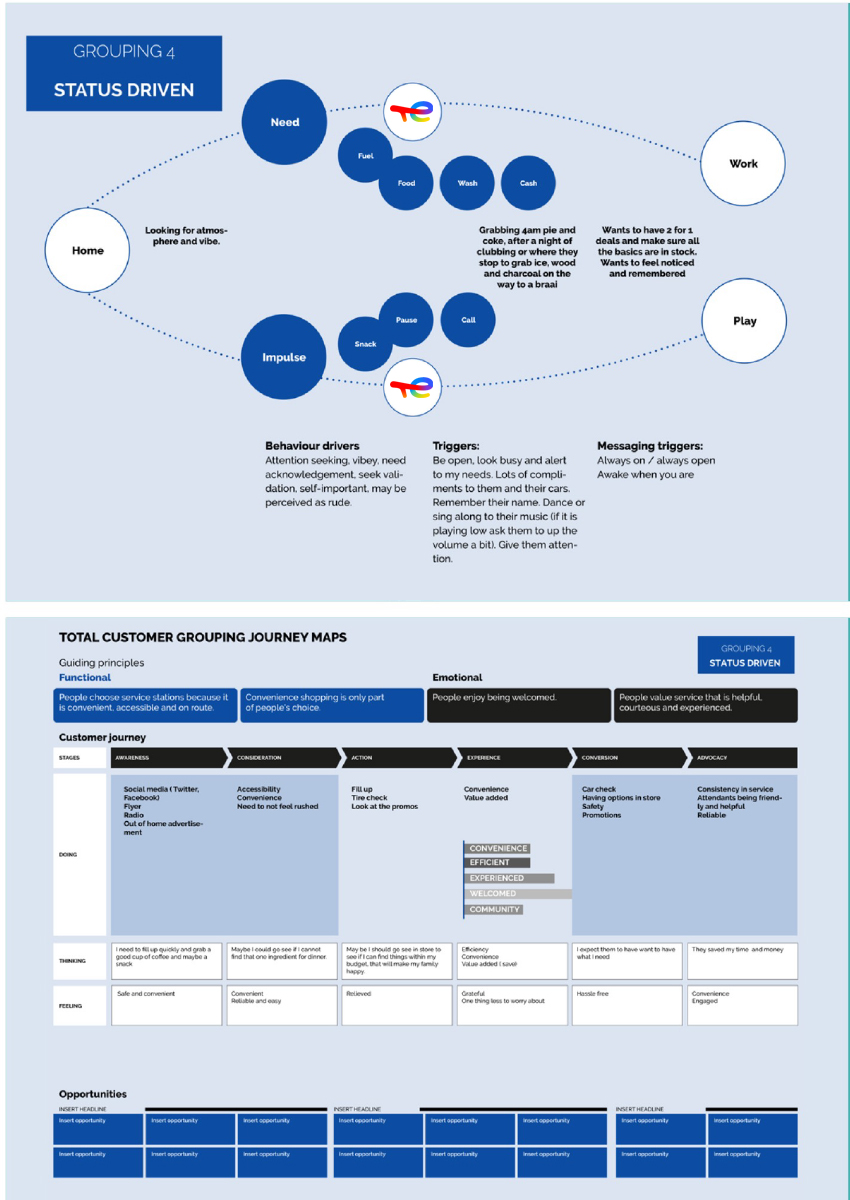
Objective: The goal was to create a segmentation strategy using psychographics and behavioral patterns to map products based on consumption habits, time of day, and customer mindsets.
Example of simplified segmentation journey shown
Our approach:
Data Collection and Analysis: We collected customer data through surveys, transaction histories, and behavior tracking to identify psychographic factors (values, interests) and consumption patterns (time of day, frequency, product preferences).
Psychographic Profiling: Customers were segmented by motivations, values, and lifestyles, such as convenience-seekers, eco-conscious individuals, and luxury-driven customers.
Behavioral Mapping: We identified consumption patterns, mapping when customers are most likely to make purchases (morning, midday, evening) based on their habits and mindsets.
Segmentation Based on Time, Habits, and Mindsets: Segments were created based on when customers make purchases.
Mapping Products to Segments: Products were aligned with segment needs
Outcome: This segmentation enabled personalized marketing, optimized touchpoints, and increased conversion rates. By tailoring products to customer habits and mindsets, the company improved satisfaction and engagement.
Impact stats
20%+
Increase in Conversion Rates: Personalized marketing and optimized touchpoints led to a significant boost in conversion rates.
18%+
Increase in Sales: Mapping products to specific customer segments contributed to a notable sales increase.
25%+
Higher Engagement: Segmentation aligned with customer habits and mindsets drove increased engagement across marketing channels.